Many Christians approach prophecy primarily to discover future events or identify current world happenings in the Bible.
As a result, prophetic books are often read through the lens of today’s headlines rather than through the historical and biblical context in which they were originally written.
Faithful Bible interpretation requires a different approach.
Before asking what a prophecy might say about our world today, we must first ask what God intended to communicate to the people who first received it.
Only after understanding the original message can we faithfully apply its truths to the Church today.
The prophets were not primarily fortune tellers.
They were God’s covenant messengers, commissioned to call His people back to faithfulness, expose sin, warn of judgment, announce hope, and reveal God’s unfolding plan of redemption.
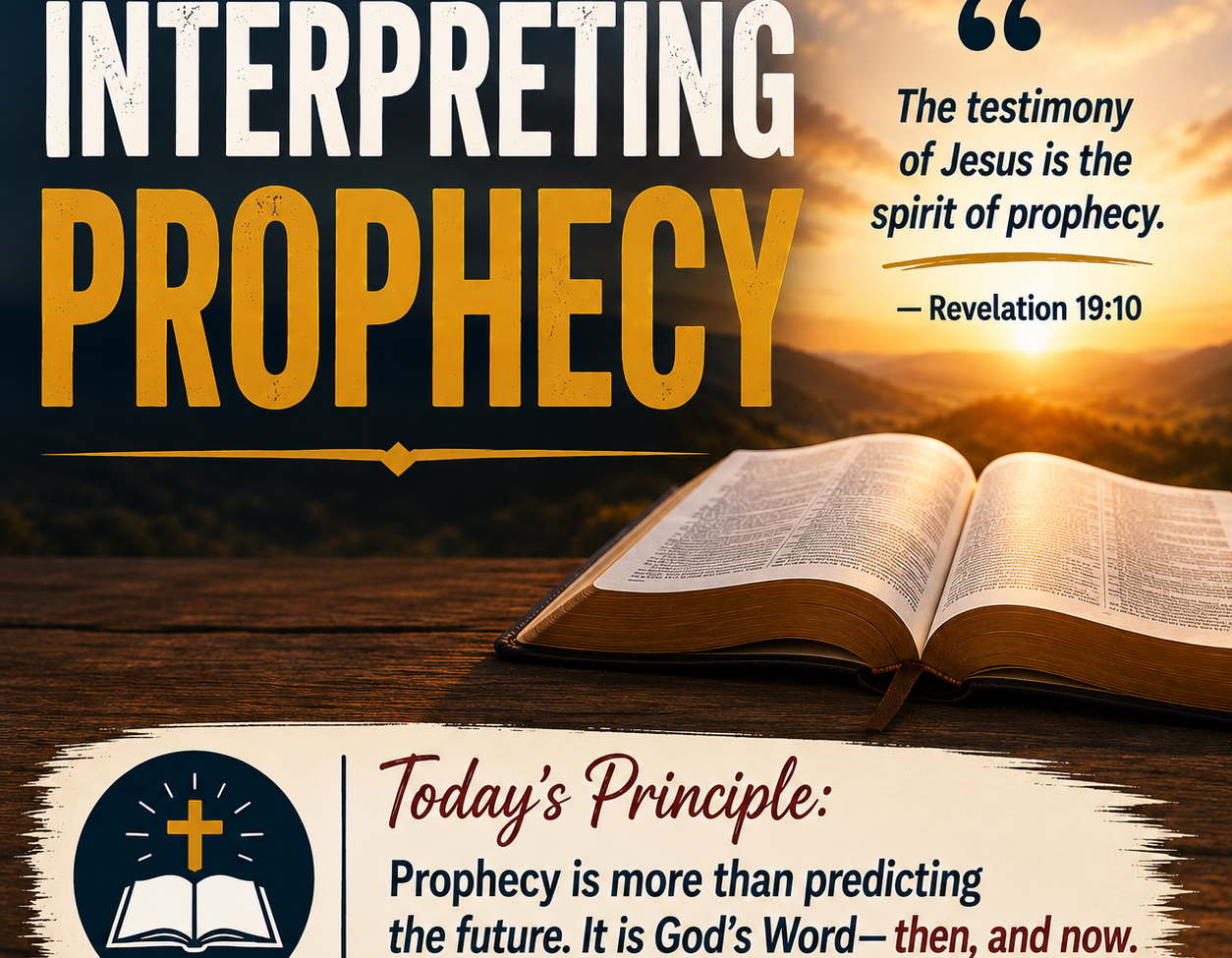
Although many prophetic passages include predictions of future events, prophecy is much broader than prediction.
It is God’s authoritative Word spoken through human messengers to accomplish His divine purposes.
What Is Biblical Prophecy?
A prophet was God’s chosen spokesperson.
God revealed His message to the prophet, who then faithfully proclaimed it to God’s people.
Throughout the Old Testament, prophets such as Isaiah, Jeremiah, Ezekiel, Hosea, Amos, Micah, and others confronted kings, priests, and nations with God’s Word.
Sometimes their message brought encouragement; at other times it announced judgment because of persistent rebellion.
Many people think prophecy is concerned only with predicting the future. This is not its primary function.
Bible scholars often distinguish between two aspects of prophetic ministry.
Forth-Telling and foretelling
Forth-telling is proclaiming God’s truth to people in their present situation. The prophet exposes sin, calls people to repentance, explains God’s covenant, and urges obedience.
A preacher warning or rebuking his Christians about sin from Scripture is prophesying through forthtelling.
Foretelling involves announcing future events that God intends to accomplish.
For example, Isaiah foretold the coming of the Messiah (Isaiah 9:6–7).
As Bible teachers, we should remember that the prophets spent far more time calling people to repent than predicting distant future events.
Likewise, we should not always incline ourselves to the foretelling prophecy as the ultimate way through which God communicates with His people
Today’s principle
To be continued…..

Whether in the classroom or teaching Scripture, he has a gift for taking difficult concepts and breaking them down into practical, understandable truths that people can grasp and apply. As a Bible teacher, Jini is committed to helping Christians understand God’s Word in its proper context, interpret it faithfully, and teach it with clarity and confidence.
View All Articles