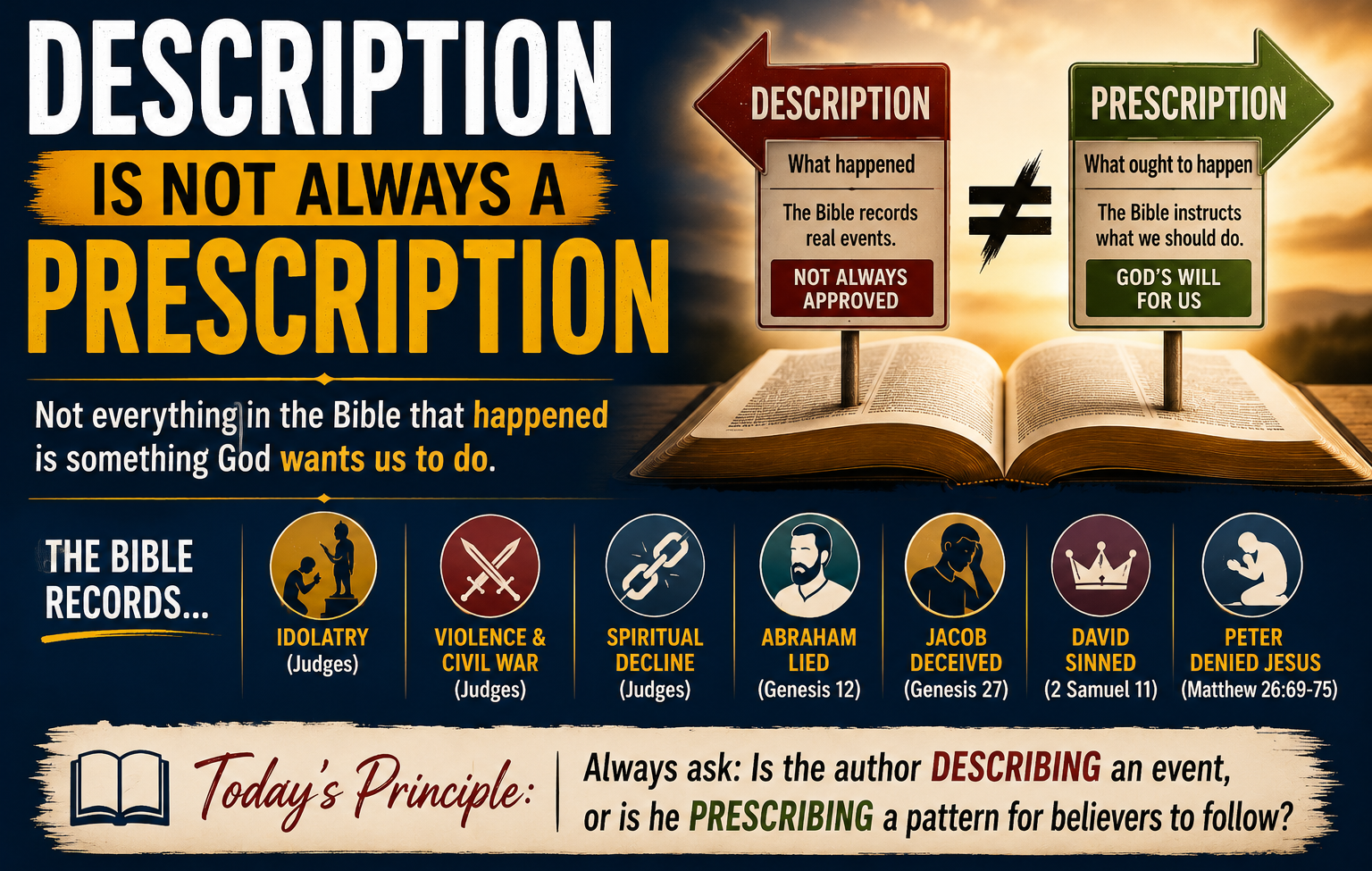
One of the most important principles for interpreting biblical narratives is learning the difference between description and prescription.
A narrative often describes what happened. It does not always prescribe what ought to happen.
This distinction protects us from many serious interpretive errors.
For example, the Book of Judges records repeated cycles of idolatry, violence, civil war, and moral failure.
The fact that these events are recorded in Scripture does not mean God approves of them. The author is describing Israel’s spiritual decline, not recommending its behavior.
Similarly, the Bible records that Abraham lied about Sarah.
Jacob deceived his father.
David committed adultery.
Peter denied Jesus.
These events are faithfully recorded, but they are not presented as examples to imitate.
The Bible often records human failure to demonstrate our need for God’s grace.
Therefore, Bible teachers must always ask: Is the author describing an event, or is he prescribing a pattern for believers to follow?
Confusing these two ideas has led to countless misunderstandings of historical narratives.
Today’s principle: Always ask: Is the author describing an event, or is he prescribing a pattern to follow.

Whether in the classroom or teaching Scripture, he has a gift for taking difficult concepts and breaking them down into practical, understandable truths that people can grasp and apply. As a Bible teacher, Jini is committed to helping Christians understand God’s Word in its proper context, interpret it faithfully, and teach it with clarity and confidence.
View All Articles